
Ever felt your heart skip a beat when you grab the steering wheel? It doesn't matter if you're new or experienced; a few small tweaks can make a big difference. When your hands are in the right place, the ride feels smoother and even a bit fun.
In this post, we'll share simple tips and proven tricks to help you gain better control on every turn. Have you ever wished your drive felt steadier? Get ready to see how a few small changes can boost your safety and confidence behind the wheel.
Steering Basics: How to Steer a Car Safely
Start out by setting your hands in the right spots. The best tip is to hold the wheel at 9 and 3 o’clock. If you’re taller or the car feels a bit tight, going with 10 and 2 o’clock is just fine too. Imagine the wheel like a clock, steady hands make for a steady ride.
Before you grab the wheel, take a moment to adjust your seat and steering column so you’re comfortable. This little step makes steering feel easier and keeps you in charge. Once you’re comfy, remember that good steering is all about smooth, well-timed moves.
For turning, try the push-pull technique. If you’re turning left, pull the wheel down with your left hand until it hits 6 o’clock, while your right hand slides down and then pushes the wheel back up to 12 o’clock. The same idea works for a right turn, but with the right hand taking the lead. These moves help you keep hold of control and make the turn flow nicely. If you need extra control on a sharper turn, switching to hand-over-hand lets your hands cross briefly for a quicker turn.
At low speeds, a fast full-lock turn can be handy for quick direction changes. But don’t steer one-handed or cross your hands over the wheel, these habits can slow your reaction time and make steering less safe during sudden maneuvers.
Ideal Hand Placement When You Steer a Car
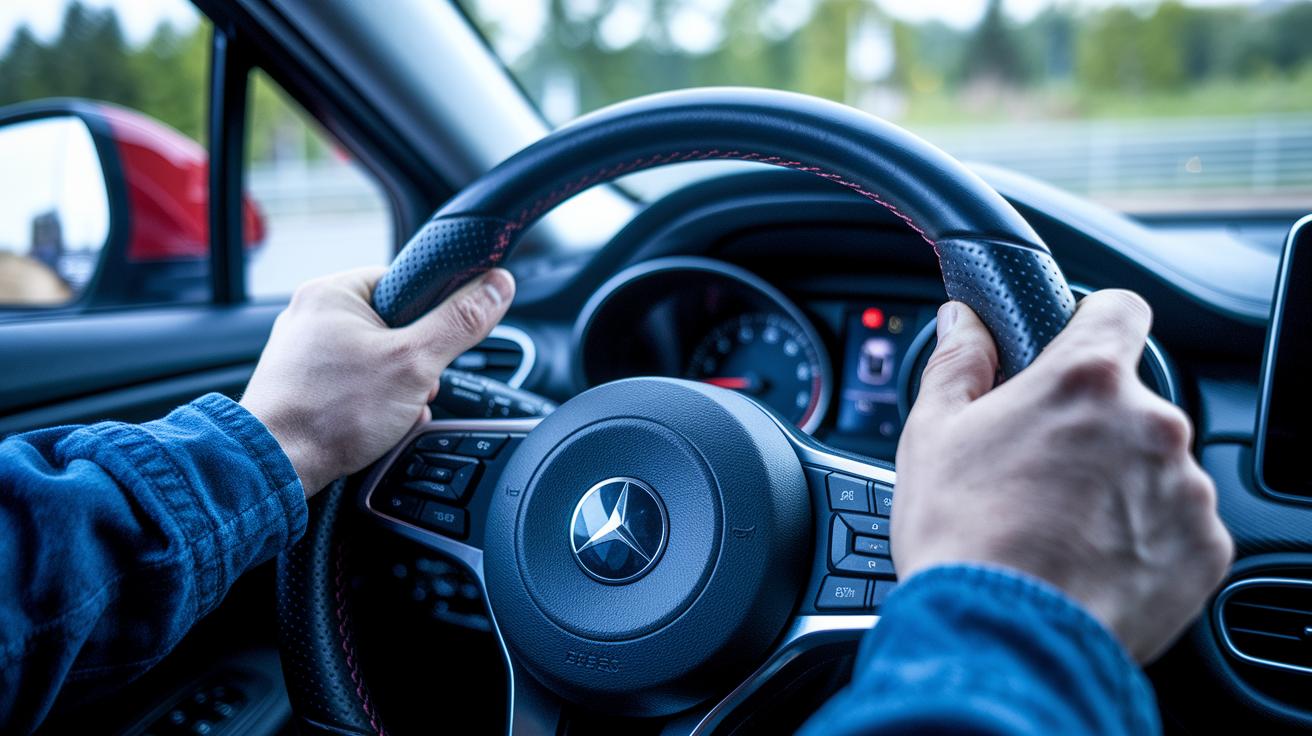
Getting your seat and steering wheel adjusted is always important, but a few extra tweaks can make a big difference when driving in tough spots. When you face emergencies or slippery roads, some driving instructors suggest moving your hands a little away from the usual 9 and 3 positions. For example, instead of sticking strictly to 9 and 3, you might lower your hands slightly so you can respond faster if something unexpected happens. Before modern safety rules, drivers often used the old hand placements and didn’t even realize they were slowing down their reactions.
Today’s steering wheels come with comfy, rounded grips and built-in controls, which invite you to naturally shift your hand placement. Many drivers find that blending the classic 9 and 3 position with a lower grip helps reduce fatigue, especially when reaching for dashboard controls during sudden turns.
| Driving Condition | Recommended Adjustment | Note |
|---|---|---|
| Normal Conditions | 9 and 3 o’clock | Standard balanced grip |
| Emergency Maneuvers | Slightly lower grip than 9 and 3 | Enhances quick response |
| Modern Ergonomic Wheels | Blend 9 and 3 with a natural lower hand position | Accommodates integrated controls |
By shifting your hand placement to match different road conditions and wheel designs, you can gain extra control that the standard positioning might not provide.
Push-Pull and Hand-Over-Hand Maneuver Techniques for Car Steering
When you need to make everyday turns, try the push-pull method. For a left turn, let your left hand pull the wheel down toward the bottom (think 6 o’clock) while your right hand slides down and pushes the wheel up to the top (12 o’clock). For a right turn, simply swap the motions. Picture moving clock hands in a smooth rhythm, every move helps keep your car steady. It might help to start slow so you can really feel the grip and timing, just like building muscle memory during a gentle practice session.
For sharper or larger turns, the hand-over-hand technique offers extra control. In this method, you cross your hands as the wheel turns, giving you more power when tackling tight curves. At lower speeds, a quick full-lock turn can change your direction cleanly without feeling wobbly. Just remember to avoid sudden jerks, steady, gentle moves work best.
- Practice the push-pull technique in a safe, open area to build your natural control.
- Use the hand-over-hand method for turns that need a sharper, tighter angle.
- At low speeds, try a full-lock turn for a quick yet controlled maneuver.
Managing Turning Radius and Corner Negotiation When Steering a Car

When you're driving through narrow city streets or twisty neighborhood roads, knowing your car's turning circle is a must. The turning circle is based on how far you can turn your wheel and the gap between your front and back wheels. For example, if you turn the wheel fully in less than a second at low speeds, you’re making a clear and smooth change in direction. This quick move helps keep your car steady and prevents any jarring motions that could unsettle your ride.
Next, think about how you handle corners. Picture approaching a tight curve; easing into the turn can really help. Instead of yanking the wheel suddenly, ease it gradually. This way, your tires grip the road better and the ride stays smooth, even when the curve feels a bit challenging.
When it comes to kerbside parking, a little extra care goes a long way. Make small, steady steering adjustments to keep your vehicle aligned, staying within about 30 centimeters of the curb. These little techniques help boost your control, so you can confidently handle busy urban corners.
- Keep your steering input smooth to maintain tire grip.
- Use gradual adjustments rather than sudden, sharp turns.
Safe Steering Practices and Common Mistakes to Avoid When You Steer a Car
Today, steering systems come in many flavors like electric, hydraulic, and mechanical. Each one needs its own little twist in how you move your wheel. For example, an electric system might feel best with light, gentle touches, while a hydraulic setup gives you a firmer, more noticeable feel, kind of like finding that perfect radio station without any static.
For the basics, stick with a solid two-handed grip and avoid steering with just one hand. Check out our Steering Basics and Push-Pull and Hand-Over-Hand Maneuver Techniques sections for more friendly advice on getting it just right.
Practicing Steering Skills: Drills and Tutorial Recommendations for Steering a Car

Start by trying out hands-on control drills in a quiet, safe spot. A lot of beginners kick things off with a 5-hour session in places with little traffic. This way, you get used to basic steering moves without feeling rushed. Picture yourself driving in a smooth figure-eight; it's like drawing a looping line on an empty road that helps set a natural steering rhythm.
You can also practice indoors. Digital simulators and online driving tutorials let you rehearse without any risk. Think of it as your virtual stage where you build muscle memory and sharpen your reactions before hitting the open road.
For a complete training session, give these drills a try:
| Drill | Description |
|---|---|
| Figure-eight | Helps build a continuous flow in steering. |
| Slalom cones | Focuses on quick directional changes. |
| Straight-line driving | Practices perfect wheel centering. |
| Kerbside parking alignment | Tunes up your ability to make small adjustments. |
| Reverse maneuver | Improves your skill in backing up safely. |
Each drill targets a key beginner skill, and you can even try them indoors before moving outside. Many online tutorials also show emergency turns and other tricky moves, building your confidence until your steering feels natural and steady.
Adjusting to Different Steering Systems and Vehicle Setups for Car Steering
Modern cars come with all sorts of steering systems, electric, hydraulic, or mechanical, and each one feels a bit different in your hands. Start by setting your seat and steering wheel so you can reach everything naturally. When you’re comfortable, the steering becomes smoother and less tiring.
Imagine turning your wheel with the ease of winding a familiar clock. Make sure your seat lets you see the dash clearly and that the wheel is at a comfy angle. It’s a small change that makes a huge difference in handling.
One challenge you might face is bump steer. This happens when the car’s suspension isn’t lined up right, causing the wheels to shift slightly when you hit bumps. To keep things steady, get your suspension aligned regularly, ideally every 12 months, to maintain even tire wear and a responsive feel.
If your steering starts to feel off or you notice unusual feedback from the wheel, it might be time to have a professional look at your setup. Knowing your car’s rotation limits helps prevent both oversteering and understeering, so you can drive with more confidence.
Here are a few simple tips to keep your ride feeling just right:
- Adjust your seat and steering wheel often.
- Pay attention to how your car responds on different roads.
- Schedule regular checkups for wheel alignment and suspension tuning.
These easy steps will help you maintain a smooth, responsive drive with every twist of the wheel. Ever feel that rush when everything just clicks? That's the joy of a well-tuned car.
Final Words
In the action, we reviewed the basics of steering, ideal hand placements, and different turning techniques. We touched on effective push-pull and hand-over-hand methods, safe moves, and practical drills to build confidence behind the wheel.
We also compared various steering systems and set-ups to help you get comfortable behind the wheel. This guide will help you learn how to steer a car with control and confidence. Enjoy every mile with your newfound skills!
FAQ
How to practice steering a car at home
Practicing steering at home means using safe, controlled settings like an empty parking lot or simulator, focusing on hand placement and smooth techniques like push-pull maneuvers to build muscle memory.
What is car steering control for beginners
Car steering control for beginners means using a firm, two-handed grip at 9 and 3 o’clock and practicing basic techniques, which builds confidence and better vehicle response.
How to properly turn the steering wheel for a driving test
Properly turning the steering wheel for a driving test means starting with a balanced grip, using smooth push-pull or hand-over-hand techniques, and avoiding abrupt movements to maintain control throughout the turn.
How to steer a car around a corner
Steering a car around a corner means gradually turning the wheel to the correct angle, using push-pull techniques to keep the car stable and smooth through the curve while maintaining proper speed.
How to get better at steering a car
Getting better at steering a car means regular practice with drills like figure-eights and slalom cones, focusing on consistent grip, controlled movements, and learning smooth transitions for improved control.
What is the proper way to hold a steering wheel for CDL
The proper way to hold a steering wheel for a CDL means using a two-handed grip at 9 and 3 o’clock, ensuring your seat and steering adjustments suit your body for maximum control on the road.
How to hold a steering wheel with one hand
Holding the steering wheel with one hand reduces control and is generally not advised; it can compromise responsiveness during sharp or unexpected maneuvers, so using both hands is always safer.
What does it mean to steer a vehicle
To steer a vehicle means using the steering wheel to change direction by adjusting the wheel’s angle, which allows you to navigate curves and maintain the car’s proper path safely.
How do you spell steer as in a car, and is it steer or stear
Steering a car is spelled “steer” without an additional letter; the correct term refers to guiding the vehicle using the steering wheel.