
Have you ever thought about how a few simple checks can keep your VW running as smooth as a well-tuned engine? It might seem a bit overwhelming at first, but routine tasks like oil changes, tire rotations, and quick brake checks really make a difference. Think of it as a health check-up for your car, keeping it safe and ready for the road. In this post, you'll find easy-to-follow tips that help you take care of your Volkswagen and avoid those costly repairs later on.
Your Complete Volkswagen Maintenance Checklist
Keeping your VW in great shape is easy if you stick to a simple checklist. This plan covers the key service tasks that help your car run smoothly and last longer. For example, changing your oil every 5,000 to 10,000 miles gives your engine the care it needs. It’s like a quick check-up, listening for strange sounds or noticing any signs of wear.
| Task | Interval | Notes |
|---|---|---|
| Oil change | 5,000–10,000 miles | Use VW-approved oil and replace the filter |
| Tire rotation | 6,000–8,000 miles | Helps keep your tires wearing evenly |
| Brake inspection | Every service visit | Keep an ear out for squeaking or grinding sounds |
| Coolant flush | As specified in your manual | Prevents overheating and checks for leaks |
| Battery check | Seasonally | Replace if older than 3 years and check terminals |
| Software update | During service visits | Keeps your infotainment and assistance systems current |
Make sure to adjust this checklist for your specific VW model and how you drive. Tinker with the intervals or add extra inspections as needed, and soon you’ll have a routine that keeps your ride flawless every time you hit the road.
Oil Change and Fluid Service Intervals for Volkswagen
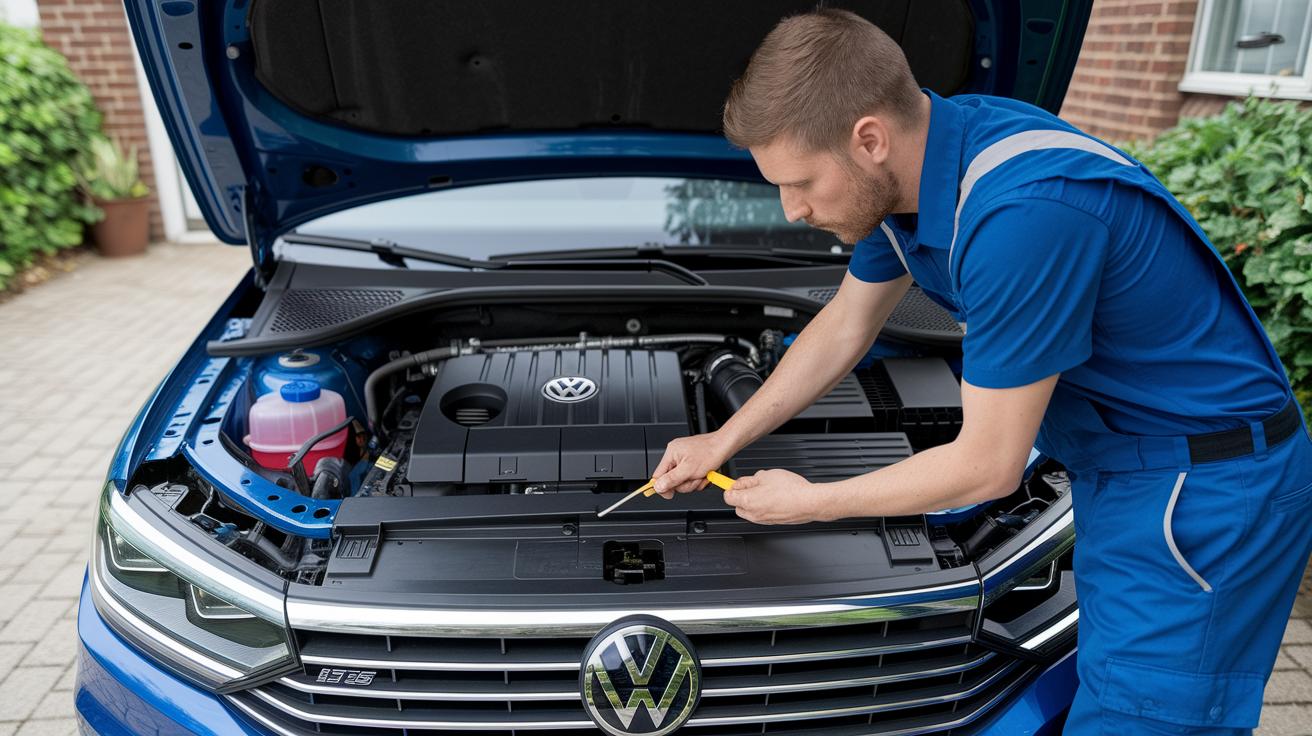
Taking care of your VW means keeping up with oil and fluid check-ups. Your car runs best when you use the oil that matches the owner’s manual exactly. Depending on how you drive, Volkswagen suggests an oil change every 5,000 to 10,000 miles. Regular oil changes help your engine parts work smoothly and can save you from expensive repairs later.
Engine Oil Service Details
For your engine, an on-time oil change is a must. When you hit the recommended miles, swap out the old oil with Volkswagen-approved oil and change the oil filter too. This simple step not only keeps your engine nicely lubricated but also prevents dirt and gunk from building up.
Coolant and Brake Fluid Intervals
Next, take care of your coolant and brake fluid. A coolant flush every 40,000 miles or every 4 years keeps the engine cool and stops overheating. And remember, replacing your brake fluid every 2 years is key to keeping your brakes responsive and safe on the road.
Transmission and Washer Fluid Tips
Finally, give some attention to your transmission fluid and washer fluid. Changing the transmission fluid between 40,000 and 60,000 miles helps your gears shift smoothly. And topping up your windshield washer fluid whenever needed ensures a clear view, making every drive safer and more enjoyable.
Volkswagen Tire Care and Rotation Schedule
Keeping an eye on your tires is a must if you want your Volkswagen to feel safe and smooth on the road. Check your tire pressure monthly using the PSI listed on your driver door placard. This little habit not only keeps your ride well balanced but also saves you some fuel. When you swing by for an oil change, take a minute to measure your tire tread with a simple gauge. If it drops below 2/32 inches, it’s time for new tires because worn-out treads can reduce grip in wet weather and affect your car's handling.
Rotate your tires every 6,000 to 8,000 miles to even out their wear and help them last longer. You can follow a detailed guide on the tire rotation schedule for more clarity. Uneven wear might even point to alignment issues, so it’s smart to have your alignment checked every 12,000 miles or if you notice anything odd with the tread. Keeping up with tire checks, rotations, and alignment means your Volkswagen will always be ready to give you its best performance on every drive.
Brake System Maintenance Tips for VW Models

Listening to your brakes is like catching a whisper of trouble before it shouts. When you take your VW in for service, a technician will pay close attention to any strange sounds, think of a soft squeal or a low grinding noise when you press the pedal. These sounds can be little warnings that your brake pads are getting thin. Technicians will also take a good, close look at the pads, rotors, and brake lines. They'll measure the pad thickness and suggest a replacement if it falls below 3 mm. Keeping an eye on these details stops small issues from quickly turning into big, expensive repairs. If you spot any scoring on a rotor or notice leaks in the brake lines, it's best to get them sorted out right away.
Brake fluid maintenance is just as crucial. Every couple of years, bleeding the brake fluid keeps your braking system quick and reliable. Regular fluid checks make sure that everything's working right, especially when you're using your brakes hard or driving in tough conditions. Technicians ensure the brake fluid is clean and at the correct level, which helps prevent sudden failures. This careful approach makes sure your Volkswagen stays safe and smooth on the road.
DIY vs. Professional Volkswagen Maintenance
If you're a VW owner, you might enjoy taking care of simple tasks on your own. Topping off fluids, swapping out air filters, or checking tire pressure can be done in just a few minutes at home. It’s like giving your car a quick check-up that saves you a few dollars, and if you're comfortable with the tools, it's pretty fun too.
But when you need a deeper fix, VW dealerships have an edge. They use skilled, factory-trained techs with real VW parts and follow the manufacturer’s instructions exactly. You get clear pricing and trustworthy service, which can be especially helpful when tackling major repairs or warranty issues.
Then there are independent repair shops. These places often have flexible hours and lower labor costs that can fit a busy schedule. However, they might not always stock original parts or the latest tech updates. Check out your local listings at https://thecivics.com?p= for more info on nearby mechanics. This way, you can pick the service that fits both your VW’s needs and your budget.
VW Maintenance: Smart Care for a Flawless Ride

When you plan your VW’s upkeep, knowing the going rates really helps you budget better. For instance, an oil change usually costs between $100 and $150. And while a tire rotation with balance might run about $60, swapping out your brake pads can set you back roughly $250 to $350 per axle. You might also face around $120 for a coolant flush or up to $300 for a full transmission service. This gives you a clear picture of what to expect, helping you decide if a task is easy enough to try yourself or if it's better left to a pro.
VW maintenance prepaid plans can smooth out these expenses over time. Many owners set aside about $400 to $600 each year for routine care, which means fewer surprises when it's time for service. It also helps to keep an eye out for seasonal promotions. Even simple DIY checks like keeping an eye on fluid levels before winter or checking your tire pressure every month can make a big difference.
This thoughtful approach to maintenance not only helps your Volkswagen last longer but also makes sure every drive feels smooth and worry-free. After all, isn’t that what every good ride should deliver?
Digital Tools and Logs for Tracking VW Maintenance
Keeping tabs on your Volkswagen’s service schedule is a breeze with today’s digital tools. There are handy apps that remind you when it’s time for an oil change or tire rotation based on your car’s mileage. You can easily set up alerts and check out your service history right on your phone, making maintenance feel quick and stress-free.
Using a maintenance app, like the one you find on unionno.com, can really simplify your check-ups. It’s like having a personal garage assistant that helps you stay on top of everything.
Digital logs and downloadable service booklets add another layer of convenience. You can grab a VW service booklet PDF or get a car maintenance log template from unionno.com. This lets you record dates, mileage, and services done, all in one neat digital file.
Not only does keeping a digital record help with warranty compliance, but it can also boost your car’s resale value. With all your service details organized, you’ll know that your Volkswagen is running smoothly mile after mile. Digital upkeep makes it all easier, letting you focus more on enjoying the drive.
Final Words
In the action, we've covered everything from a step-by-step Volkswagen maintenance checklist to detailed tips on oil and fluid care, tire check, brake upkeep, and even the choices between DIY fixes and professional help. We also broke down cost analysis and shared digital tools to track your vehicle’s service history.
This guide offers practical insights for all aspects of vw maintenance. It leaves you with clear steps and tips that you can use to keep your ride running smoothly and confidently. Enjoy the drive!
FAQ
What is Volkswagen maintenance schedule?
The Volkswagen maintenance schedule means sticking to regular services like oil changes, tire rotations, brake inspections, coolant flushes, battery checks, and software updates as recommended by the manufacturer.
Where can I find VW maintenance schedule details in PDF?
The VW maintenance schedule PDF is available through Volkswagen’s official website and dealers, offering detailed checklists for various models like the Jetta and Tiguan.
What does a VW maintenance plan cover and how much does it cost?
A VW maintenance plan covers routine care services as per factory guidelines, with costs varying by service type such as oil changes, tire rotations, and brake work, keeping expenses predictable.
Where can I locate VW maintenance services near me?
VW maintenance near me means local dealerships and qualified independent shops provide scheduled services; a quick online search or trusted app can direct you to the nearest service center.
Can a regular mechanic work on a VW?
A regular mechanic can work on a VW for basic services, though specialized tasks may require technicians trained in Volkswagen systems and the use of genuine parts.
How do I check VW warranty by VIN for free?
VW warranty check by VIN free involves using Volkswagen’s online tools or trusted third-party websites to enter your VIN and review your warranty details at no cost.
Are VW vehicles, including the VW Up, expensive to maintain?
Asking if a VW is expensive to maintain means maintenance costs can vary, but overall they are typical for modern vehicles, with the VW Up showing similar routine service fees as other models.