
Ever wondered if safety ratings could change the car you buy next? When a car crashes, it shows how well it protects you in everyday situations. Over the years, experts have turned complicated crash tests into simple star scores so you can compare different models easily.
Groups like NHTSA give cars a star rating, and tests by the IIHS break down crash data into clear, easy-to-understand info. This post walks you through the top three vehicle safety ratings and explains why they might be the best guide for your next ride.
How Vehicle Safety Ratings Assist Consumers in Selecting Safer Vehicles
Vehicle safety ratings act as a simple roadmap for car buyers looking for real protection. Back in 1979, the NHTSA launched its 5-star program to show crash-test data in a clear way. They run tests like a frontal crash at 35 mph, a side hit at 38.5 mph, and a rollover test that checks the roof’s strength when it holds four times the car’s weight.
These ratings let buyers compare cars quickly so they can pick a safer ride. Over the past 40 years, more than 10,000 models have been tested, giving us tons of reliable safety info. Each star shows how well a car keeps its passengers safe, and more stars mean the vehicle performs better on the road. You can click the car safety ratings link to see detailed scores and data for every model.
In essence, these ratings take complicated crash data and turn it into a language we can all understand. They keep the important safety facts easy to spot among all the technical details. Lots of people feel that pairing a high NHTSA score with overall car quality makes the car buying process a lot simpler. With over four decades behind it, this system continues to build trust with everyday shoppers, giving everyone that extra push of confidence when they hit the road.
Decoding IIHS Crash Test Ratings and Crashworthiness Measures in Vehicle Safety Ratings
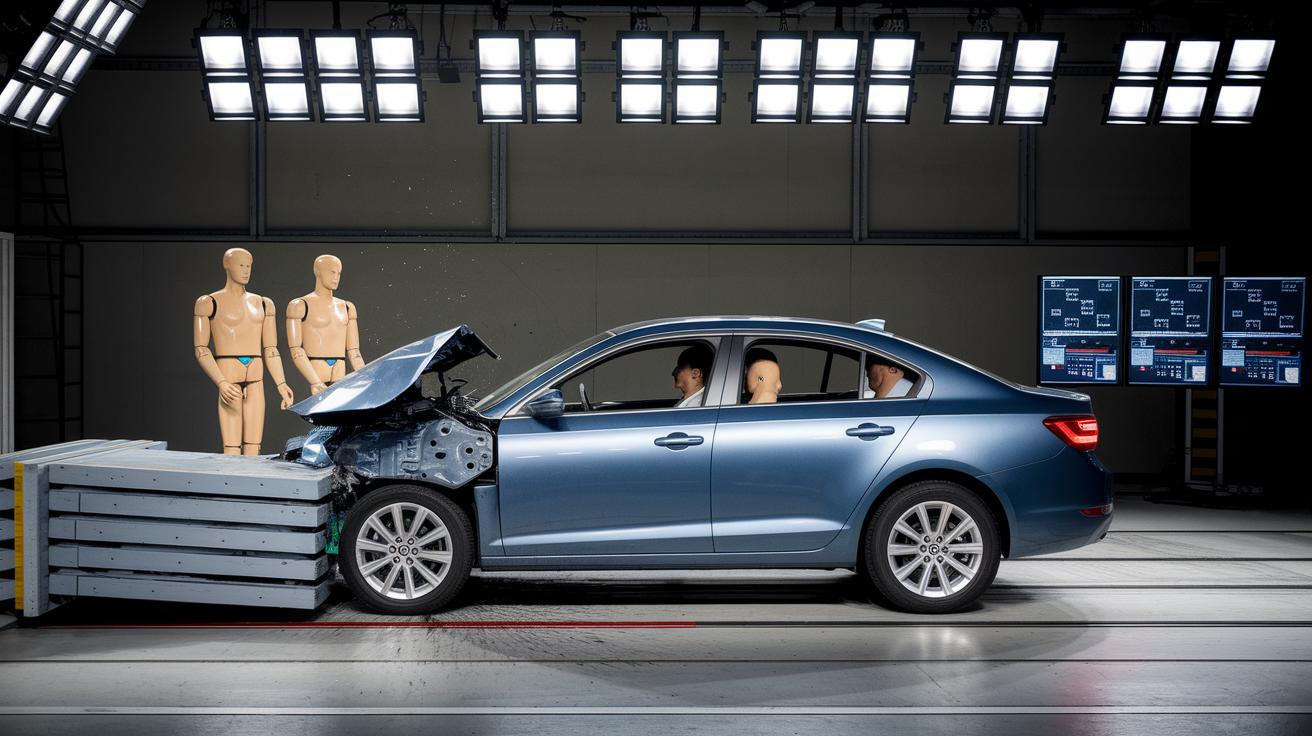
The IIHS tests car safety using four clear grades: Good, Acceptable, Marginal, and Poor. A car with a Good rating means it handles crashes really well and does a great job protecting its passengers.
They run a few different crash tests. One test involves a small-overlap front collision at 40 mph to mimic hitting a narrow barrier. They also simulate a moderate front crash and a side impact at 31 mph. Plus, they check the roof strength, it should hold up at four times the car’s weight, and review the head restraints to help prevent neck injuries.
Since 2006, the IIHS has added special honors called Top Safety Pick and Top Safety Pick+. These titles go to cars that score a Good in every crash test and come equipped with smart crash-prevention systems. In other words, these cars offer extra safety that goes beyond the basic grades.
Fun fact: Some car models have consistently earned high marks across all tests, snagging the Top Safety Pick+ title and winning over many drivers.
All these tests show that a car’s safety isn’t just a simple star rating. They break down how a car handles various crash scenarios and turn complex results into clear, trustworthy info. This way, everyday shoppers can choose a reliable, safe ride.
Evaluating Collision Avoidance and Rollover Resistance in Vehicle Safety Ratings
Modern cars are more than just metal and horsepower, they’re packed with smart safety tools. For instance, many vehicles now have a test called frontal AEB crash prevention. This test checks how quick the car is to avoid a crash. In one run, the system reacts at about 12 mph when pedestrians are involved and pushes to act up to 25 mph for hitting another vehicle. It means you might get an early alert and even see the brakes kicking in automatically when something’s in your way.
Next, there’s the forward collision warning test. This looks at how speedily the system alerts you and applies the brakes. Imagine your car giving a timely beep as it senses danger, giving you that extra moment to react.
Rollover safety isn’t left behind either. Cars go through a dynamic “fishhook” test at 30 mph, along with a static roof-crush check. If a car scores 3.5 or more, it can earn four or five stars, showing its design helps guard passengers during a rollover.
All these evaluations combine to paint a clear picture of a modern car’s ability to protect you using active safety features. It’s like getting a friendly heads-up on how all these systems work together to give you a safer ride.
Comparing SUV and Sedan Vehicle Safety Ratings: Class-Specific Insights
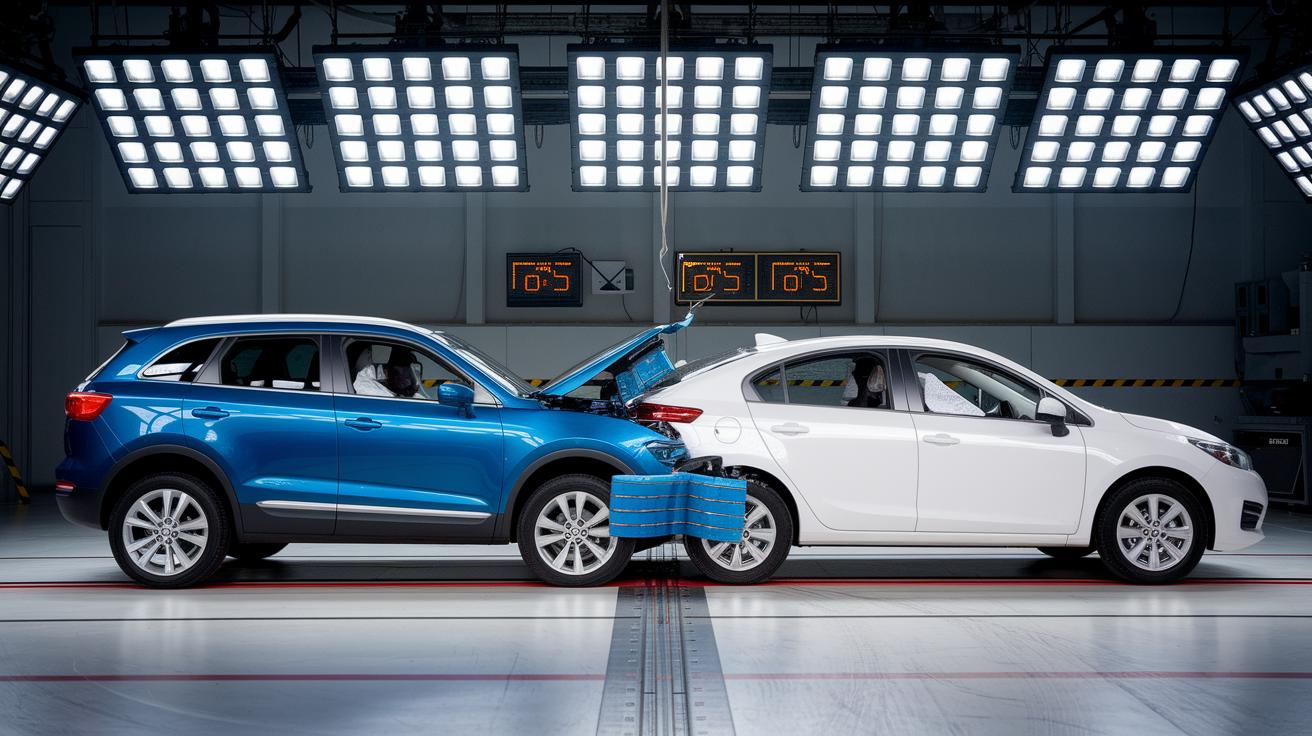
SUV and sedan safety ratings show us how these vehicles handle crash tests. SUVs sit higher, which used to mean a 44% higher chance of flipping over before tech like electronic stability control was common. Now, with stability control cutting that chance by 70%, SUVs feel a lot safer than they once did.
In 2021, about 45% of SUVs got the Top Safety Pick from the IIHS, while only around 30% of sedans reached that mark. This tells us that many SUVs now come loaded with features to protect you when things get a little wild. Meanwhile, sedans have a lighter front that helps them do well in tests that focus on small overlaps, this design boost can improve a sedan’s crash score by roughly half a grade, making them solid performers in front-impact crashes.
Every vehicle type has its own perks. It really comes down to what fits your driving style and which safety features matter most to you.
Influence of Vehicle Safety Ratings on Insurance Premiums and Child Passenger Protection
Vehicle safety ratings do more than just tell you how a car handles a crash. They can also help lower your insurance bill. Insurers check data from groups like NHTSA and IIHS. If your car earns a 5-star rating for protecting its occupants, you might see your premium drop by 8 to 10 percent. Just picture it, a car that scores high on safety tests could trim your insurance enough to cover a few gas fill-ups each month.
Insurance companies use these ratings to gauge risk too. For instance, Consumer Reports found that models with the Top Safety Pick+ title often bring about an 8 percent reduction in premiums compared to cars with lower safety scores. This is a real bonus for anyone who values both safety and saving money.
Child seat safety ratings also play a big part. The IIHS tests features like LATCH anchor positions, belt routing, and tether strength on a 1 to 5 scale. A car that does well in these tests makes it easier for parents to install child seats securely, giving extra reassurance for little ones. When you combine lower insurance fees with high child seat ratings, you get a vehicle that is a smart and reliable choice for families.
Final Words
In the action, we broke down how vehicle safety ratings guide smarter choices for safer cars. The blog covered how reliable ratings from NHTSA and IIHS show how cars fare in crash tests and active features like collision avoidance and rollover resistance. We also compared SUVs and sedans while highlighting benefits like lower insurance premiums and better protection for child passengers. This clear discussion leaves you feeling ready to use vehicle safety ratings when choosing your next ride. Enjoy the ride with confidence!
FAQ
What are vehicle safety ratings and how do NHTSA ratings work?
Vehicle safety ratings explain how well a car performs in crash tests. The NHTSA’s 5-star program uses tests like a frontal 35 mph crash, side impact, and roof strength to give clear safety scores for shoppers.
How do IIHS crash test ratings measure vehicle safety and crashworthiness?
IIHS ratings use grades such as Good, Acceptable, Marginal, or Poor based on tests like small-overlap front and roof strength. Their Top Safety Pick designations also factor in crash prevention systems for added safety.
What role do collision avoidance and rollover resistance play in modern vehicle safety ratings?
Collision avoidance systems, like forward collision warnings, help prevent accidents while tests like the dynamic fishhook evaluate rollover resistance. Together, these measures gauge how vehicles handle sudden hazards.
How do SUV and sedan safety ratings compare in crash tests and rollover risks?
SUVs and sedans differ due to design. SUVs face higher rollover risks because of their center of gravity, though modern controls now help. Sedans, with lighter front geometry, tend to score slightly better in small-overlap tests.
How do vehicle safety ratings influence insurance costs and child passenger protection?
High safety ratings can lower insurance premiums by up to 10%. They also assess features like child seat usability, which improves installation ease and overall protection for young passengers.